
What is the May birth flower?
The May birth flower is the lily of the valley, with the hawthorn as the month's second flower. If you want the actual birth flower for May, the one The Old Farmer's Almanac and most lists put first, it's the lily of the valley.
Both are named for the month in their own way. The lily of the valley's scientific name, Convallaria majalis, means “of May,” and in England the hawthorn has been called “may” for centuries, after the month it flowers.
What does lily of the valley mean?
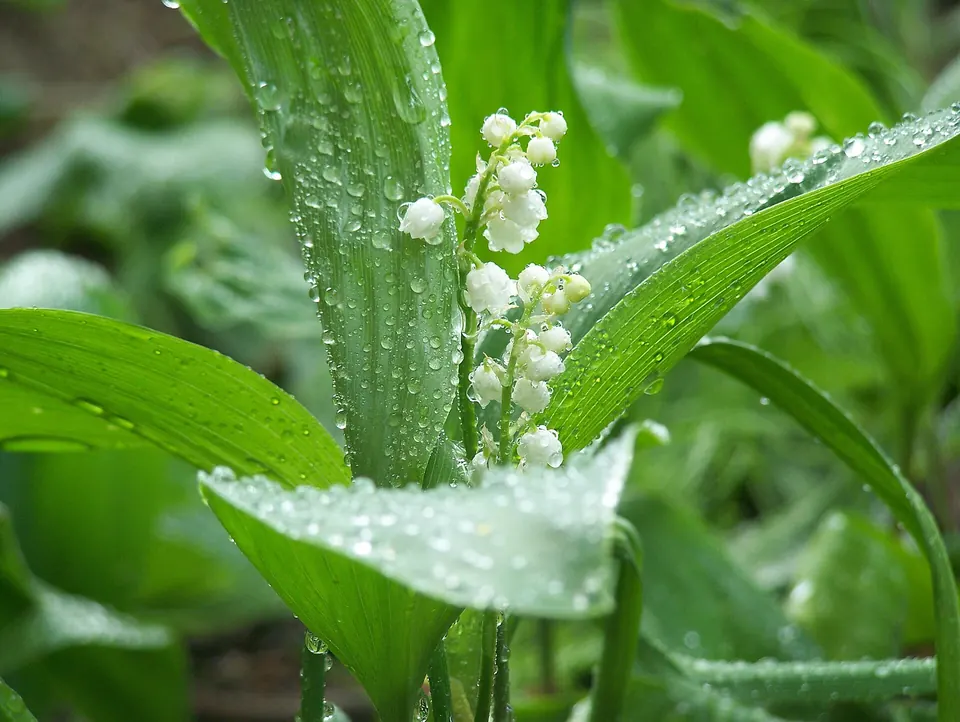

Lily of the valley means the return of happiness. That's its meaning in Kate Greenaway's 1884 Language of Flowers, and it suits a flower that comes back every May. The Almanac adds sweetness and humility, and links it with motherhood.
Its name comes from the Bible. The Song of Songs speaks of “the lily of the valleys,” and Christian tradition gave the flower names like Our Lady's tears, after a legend that it grew where Mary wept.
It's a flower of celebrations. In France it's the flower of May 1: since the early 1900s it has been sold on street corners that day and given for good luck. It's the national flower of Finland, adopted in 1967, and it was in Catherine Middleton's wedding bouquet in 2011.
What does the hawthorn mean?
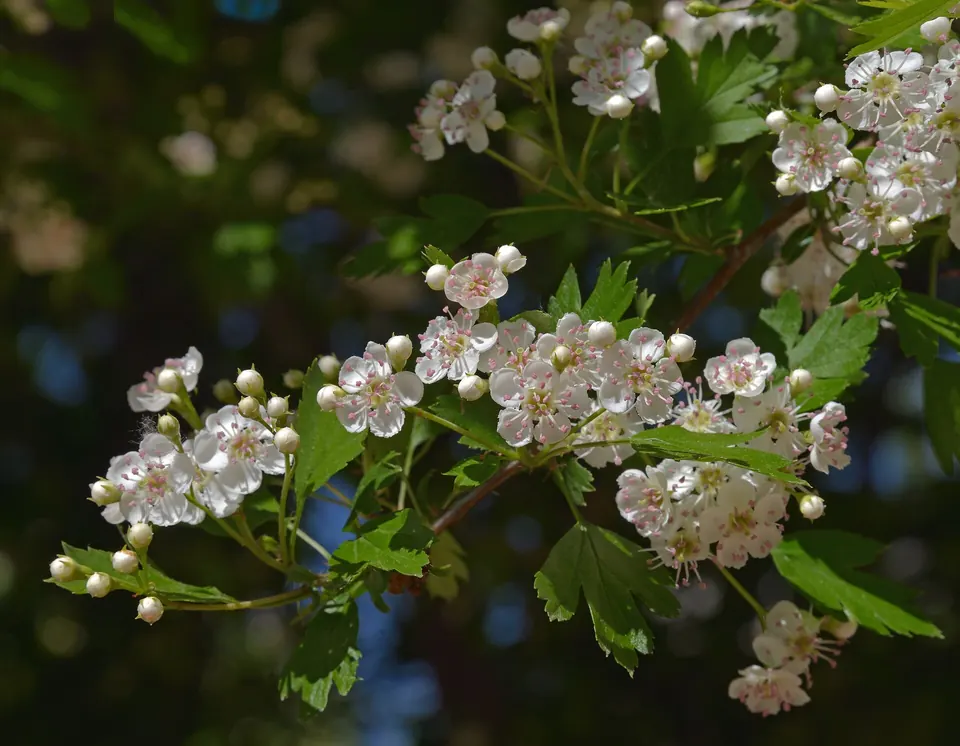

The hawthorn means hope. Greenaway gives it that word, and Henrietta Dumont's 1851 dictionary sharpens it: the hawthorn is hope, “but more particularly the lover's hope.” The Almanac adds love and protection.
Its name is old English for a hedge thorn, and for centuries it was the hedge of the English countryside. That's why so much folklore grew around it. The proverb “ne'er cast a clout till May be out,” don't shed your winter clothes too soon, may mean the month or the blossom; nobody has ever settled which.
At Glastonbury, a famous hawthorn was said to have grown from the staff of Joseph of Arimathea, and its descendants are known for flowering twice a year, once in spring and once around midwinter. In Ireland, a lone hawthorn in a field has long been a fairy tree, best left alone. In the US, the hawthorn is the state flower of Missouri, chosen in 1923.
Why does May have two birth flowers?
The Almanac lists a primary and a secondary flower because traditions differ and flowers don't grow everywhere. May's pair is unusually tidy: both are white, both bloom in May, and both carry the month in a name.
The difference is in where you meet them. Lily of the valley grows low, in shady beds under trees. Hawthorn is a thorny small tree or hedge covered in blossom. One you look down for, the other you look up at.
May birth flower tattoo ideas
Lily of the valley is one of the most popular flower tattoos, and the hawthorn gives it a tougher partner.
- An arching stem of bells. The classic lily of the valley design, a curved stem with a row of small bells, fits along a collarbone or down the side of a wrist.
- Blossom and thorn. A hawthorn twig with a cluster of white blossom and a few thorns makes a good contrast of soft and sharp.
- For a mother. With its link to motherhood and Mother's Day in May, lily of the valley works well alongside a child's birth flower.
- Black and grey. Both flowers are white, so they suit black and grey work, with the green leaves added only if you want color.
When and where do they bloom?
Both flower in late spring, true to the month. Lily of the valley is native across Europe and temperate Asia, and Flora of North America counts a native variety in the southern Appalachians. The hawthorn in this photo is the European kind; North America has many hawthorns of its own, and Missouri's state flower is the hawthorn blossom in general.
Lily of the valley
Convallaria majalis · Asparagaceae
- Native to
- Europe and temperate Asia, from Britain and Spain east to Siberia, the Caucasus and Turkey. Flora of North America also counts a native variety in the southern Appalachians.
- In flower
- Spring; May and June in Flora of China's records.
Hawthorn
Crataegus monogyna · Rosaceae
- Native to
- Europe, northwest Africa and western Asia.
- In flower
- May and June, in Flora Helvetica's records for Switzerland.
Native ranges come from the World Checklist of Vascular Plants as published by World Flora Online (CC BY 4.0), names and families from Wikidata (CC0), and flowering times from the floras listed under Sources. They describe the wild plant; garden and florist flowers follow their own calendars.
Catch it in PocketPetal
PocketPetal turns a walk into a plant hunt: snap a plant and it's caught, given a name by image recognition, a rarity roll from Common to Mythic, and a place in your collection. May is full of chances.
Lily of the valley hides in shady beds along paths and under trees; snap it from the path. Hawthorn blossom is easier to spot from a distance, in hedges, parks and along trails. The game sorts each catch into a plant type by the name it comes back with, so a hawthorn may be filed as a flower, a tree or a shrub. Filed as a tree, it can complete the Tree Hugger daily quest.
May catches count toward Spring Awakening in the Northern Hemisphere. Every roll is luck, the same for every plant. Read about rarity and all 116 badges, and find a route on our walk ideas page.
Sources and photo credits
- Birth flowers: The Old Farmer's Almanac, “Birth Month Flowers and Their Meanings”, the US list most American sources follow.
- Victorian meanings: Kate Greenaway, Language of Flowers (London, 1884), public domain, via Project Gutenberg.
- Modern meanings: The Old Farmer's Almanac, May birth flowers and “Flower Meanings: The Language of Flowers”.
- Names and families: Wikidata (CC0): Convallaria majalis, Crataegus monogyna.
- Native ranges: World Checklist of Vascular Plants, published by World Flora Online (CC BY 4.0): Convallaria majalis.
- Hawthorn: native range from the e-Flora of South Africa, via World Flora Online (CC BY 4.0).
- Flowering times: Flora of North America (Convallaria majalis); Flora Helvetica, via World Flora Online (Crataegus monogyna); Flora of China (Convallaria majalis).
- Photo, lily of the valley: tuskestibor, CC BY 3.0, via Wikimedia Commons.
- Photo, hawthorn: Ввласенко, CC BY 4.0, via Wikimedia Commons.