
What is the April birth flower?
The April birth flower is the daisy, with the sweet pea second, in the order The Old Farmer's Almanac gives.
One grows in almost every lawn and the other is a garden climber that has to be sown, so April's pair runs from the most everyday flower on this list to one of the most cultivated.
What does the daisy mean?
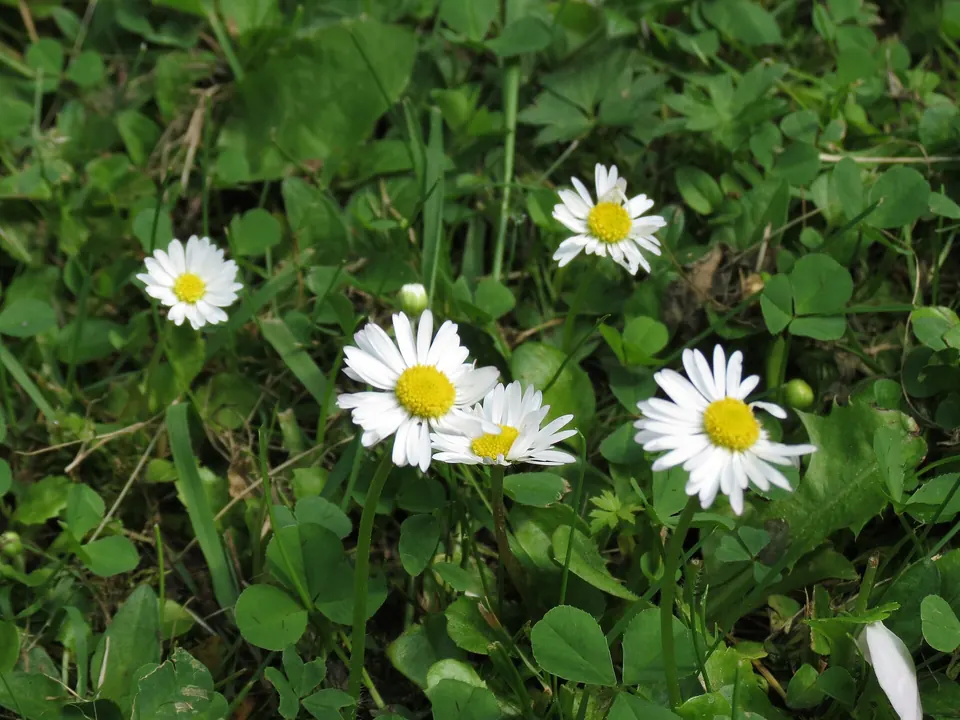

The daisy means innocence. That's Kate Greenaway's word for it in her 1884 Language of Flowers, and her book has a few more: the garden daisy says “I share your sentiments,” the wild daisy “I will think of it.” The Almanac adds loyal love, and an old one: a daisy in a bouquet meant “I'll never tell,” a promise to keep a secret.
The name is a description. “Daisy” comes from the Old English for “day's eye,” because the flower opens in the morning and closes at night, and Chaucer called it “the eye of day.”
The Victorian daisy is the small English daisy of lawns. Americans often picture a bigger one, the oxeye or Shasta, and the meanings travel with the name.
Daisy colors have meanings of their own in the Almanac: white for purity and innocence, yellow for joy and friendship, pink for affection and red for love.
What does the sweet pea mean?
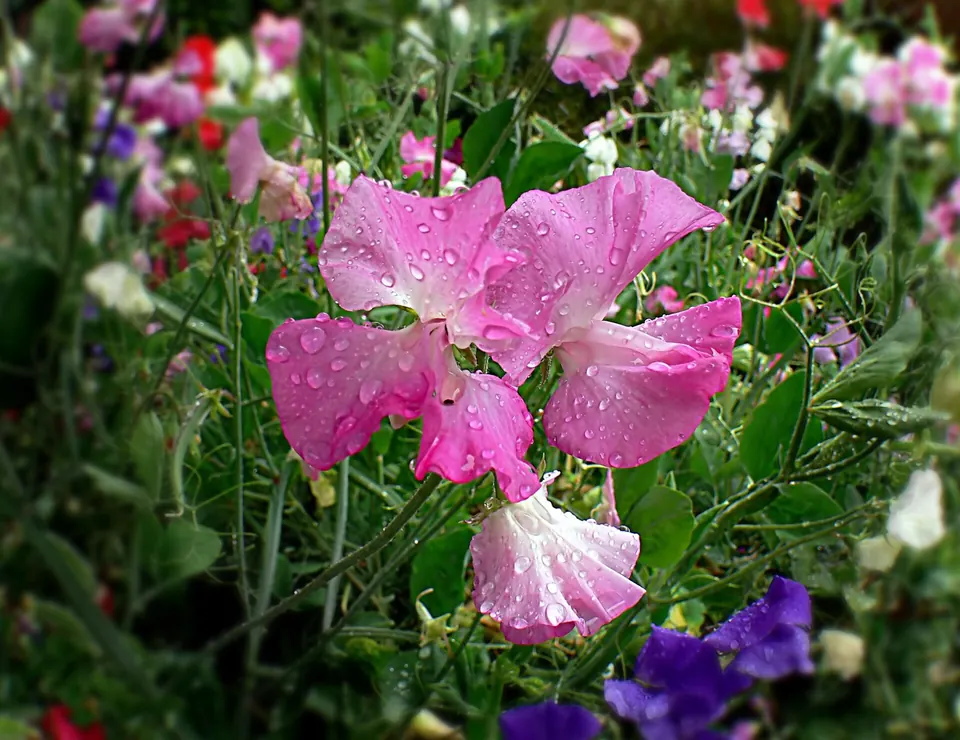

The sweet pea means delicate pleasures, or goodbye, depending on where you look, and here the sources disagree inside a single book. Greenaway lists it twice: once as “delicate pleasures” and once, as “pea, sweet,” for “departure.” The Almanac keeps both and joins them up: blissful pleasures, goodbye, and “thank you for a lovely time.”
That makes it the flower for the end of a good visit, which is how many people still give it.
Its history is unusually well documented. A Franciscan monk in Sicily, Francesco Cupani, is believed to have sent its seeds to English botanists in the late 1600s. Two centuries later a Scottish nurseryman, Henry Eckford, bred it into a sensation, and by 1901 he had introduced 115 of the 264 varieties then grown.
Why does April have two birth flowers?
The Almanac's explanation is that traditions differ and not every flower is everywhere, so it lists a primary and a secondary flower for most months.
April's pair also happens to cover both ends of a visit. The daisy is about beginnings, innocence and the open day's eye. The sweet pea is about the parting, a thank-you and a goodbye. Together they make a fitting pair for a birthday card.
April birth flower tattoo ideas
The daisy is one of the simplest flowers to draw, and the sweet pea one of the most graceful, so they balance each other.
- A tiny daisy. A ring of petals and a dot is about as minimal as a flower tattoo gets. Good for a finger, wrist or behind the ear.
- Sweet pea tendrils. The curling tendrils are made for line work and can wrap around a wrist or ankle like a bracelet.
- A daisy and sweet pea spray. One of each, stems crossed, makes a small, balanced piece for a shoulder or forearm.
- Pastels or plain black. Sweet peas come in soft pinks, purples and creams that suit watercolor; daisies look crisp in black and white.
When and where do they bloom?
The English daisy is native to Europe and western Asia and has spread across North American lawns. The sweet pea grows wild only in southern Italy and Sicily, which fits Cupani's story.
Daisy (english daisy)
Bellis perennis · Asteraceae
- Native to
- Europe, North Africa and western and central Asia. Naturalized across much of the US and Canada, mostly in lawns.
- In flower
- Spring to summer; February to November in Switzerland.
Sweet pea
Lathyrus odoratus · Fabaceae
- Native to
- Southern Italy and Sicily.
- In flower
- Summer: June to September in Flora of China's records.
Native ranges come from the World Checklist of Vascular Plants as published by World Flora Online (CC BY 4.0), names and families from Wikidata (CC0), and flowering times from the floras listed under Sources. They describe the wild plant; garden and florist flowers follow their own calendars.
Catch it in PocketPetal
In PocketPetal you snap a plant and it's yours: image recognition names it, a rarity is rolled from Common to Mythic, and it joins your collection. Daisies are the kind of catch anyone can make on the walk to school.
They're tiny, so crouch down and fill the frame, and snap them where they stand rather than walking across someone's lawn. Sweet peas climb fences in gardens and turn up at farmers' markets and florists, and a florist's bucket counts as much as a garden does.
April catches count toward Spring Awakening in the Northern Hemisphere, and a flower catch can complete the Flowering Find daily quest. Rarity is the same luck for every plant, so the most ordinary daisy on the block can come up Legendary. More on rarity, badges and walk ideas.
Sources and photo credits
- Birth flowers: The Old Farmer's Almanac, “Birth Month Flowers and Their Meanings”, the US list most American sources follow.
- Victorian meanings: Kate Greenaway, Language of Flowers (London, 1884), public domain, via Project Gutenberg.
- Modern meanings: The Old Farmer's Almanac, April birth flowers and “Flower Meanings: The Language of Flowers”.
- Names and families: Wikidata (CC0): Bellis perennis, Lathyrus odoratus.
- Native ranges: World Checklist of Vascular Plants, published by World Flora Online (CC BY 4.0): Bellis perennis, Lathyrus odoratus.
- Flowering times: Flora of North America (Bellis perennis); Flora Helvetica, via World Flora Online (Bellis perennis); Flora of China (Lathyrus odoratus).
- Photo, daisy: Donald Hobern from Copenhagen, Denmark, CC BY 2.0, via Wikimedia Commons.
- Photo, sweet pea: Bernard Spragg. NZ from Christchurch, New Zealand, CC0, via Wikimedia Commons.