
What is the March birth flower?
The March birth flower is the daffodil. The Old Farmer's Almanac lists the jonquil too, and notes that the jonquil is simply a type of daffodil, so March really has one flower in two forms.
Both belong to the genus Narcissus, the same group as December's paperwhite. The jonquil is one species of it, Narcissus jonquilla, and its name comes from the Spanish junquillo, a little rush, after its narrow leaves. In much of the American South, people call any daffodil a jonquil, which blurs the line even more.
What does the daffodil mean?
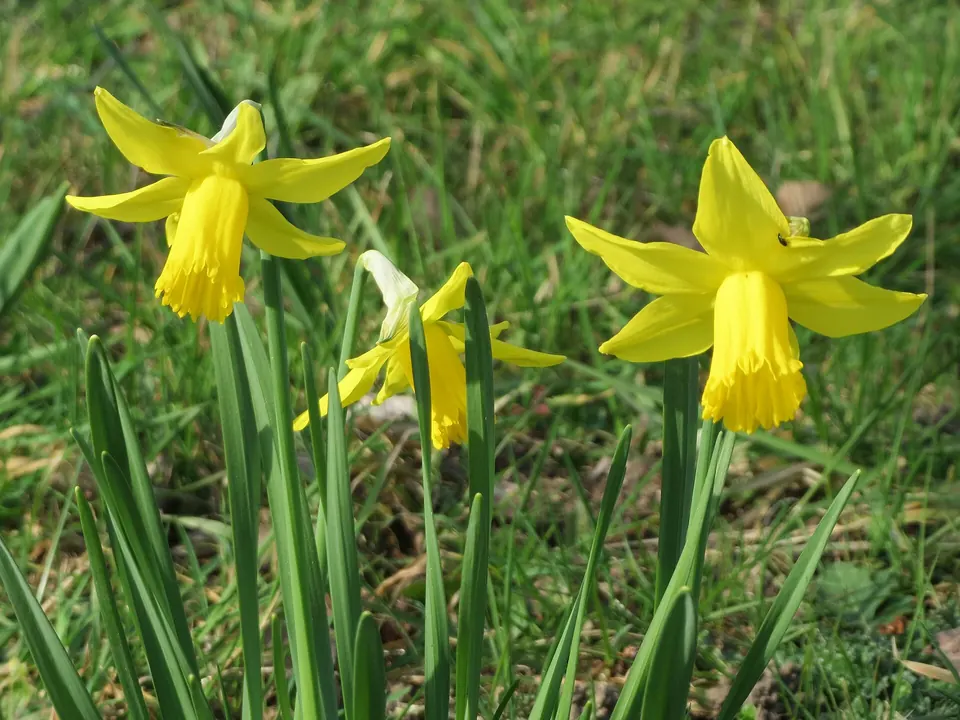

The daffodil means regard, and new beginnings. Regard is Kate Greenaway's word in her 1884 Language of Flowers; the Almanac adds rebirth and good fortune, because it's one of the first big flowers of spring, and it ties the daffodil to Easter for the same reason. Not every old book was so kind: Henrietta Dumont's American dictionary of 1851 files the daffodil with the narcissus, under “self-love.”
It's the national flower of Wales, everywhere on St David's Day, March 1, and the flower of one of the best-known poems in English. William Wordsworth's “I Wandered Lonely as a Cloud,” published in 1807, ends with his heart dancing with “a host, of golden daffodils.”
In our own time it's become a flower of hope. Cancer charities, from the American Cancer Society to Marie Curie in Britain, have long used the daffodil in their spring fundraising for that reason: it's the flower that says the hard season is over.
What does the jonquil mean?
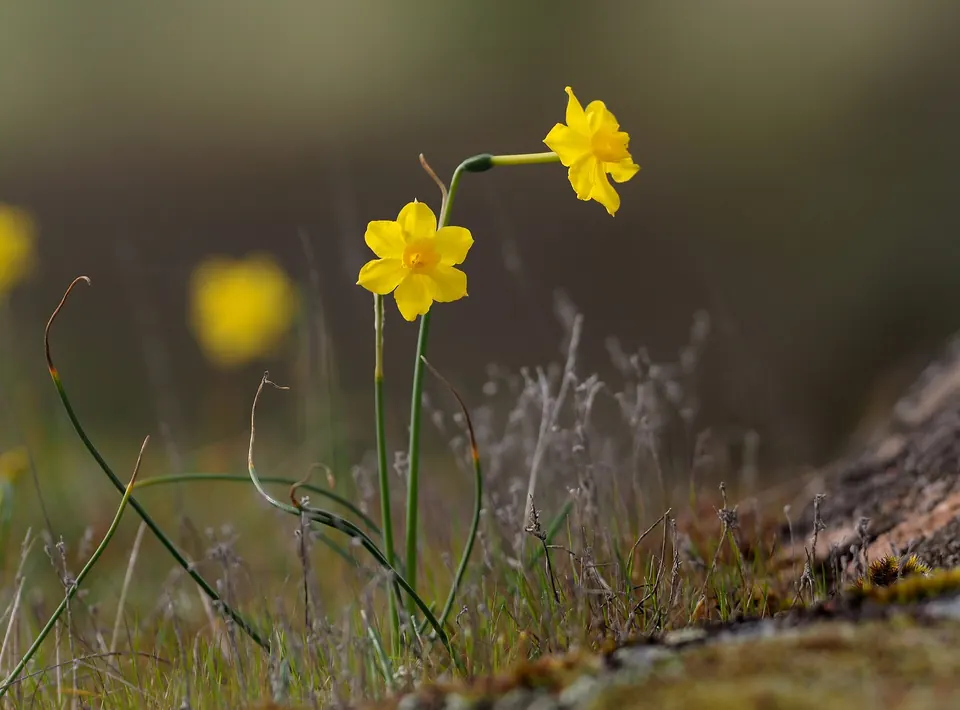

The jonquil means “I desire a return of affection.” It's one of the most specific messages in Greenaway's book, a whole sentence instead of a word, and it was meant to be sent: a jonquil handed over by a Victorian suitor asked a question.
It's a good example of how the language of flowers worked. The daffodil and the jonquil are close cousins, yet the dictionaries gave them different messages, one polite (regard) and one hopeful. Botany didn't decide the meanings; tradition did.
The jonquil comes from Spain and Portugal, and it has made itself at home in the American South. Flora of North America records it on roadsides and in old fields from Texas to the Carolinas, flowering from late winter.
Why does March have two birth flowers?
March is the odd one out. Most months pair two unrelated flowers, but March's two are the same genus, and the Almanac itself calls the jonquil a type of daffodil.
Part of the reason is language. Americans in the North tend to say daffodil and Southerners often say jonquil, and both words have their own meanings in the old books. Listing both keeps everybody's March flower on the list.
March birth flower tattoo ideas
The daffodil's trumpet makes it one of the easiest flowers to recognize in ink, even at small sizes.
- A single daffodil, side on. The trumpet and swept-back petals read clearly in fine line, on a forearm, ankle or the back of the neck.
- A jonquil cluster. Two or three small flowers on one stem give a longer, more delicate shape that suits the inside of the arm.
- March and December together. Both months have a Narcissus, so a daffodil next to a paperwhite works for a couple or siblings born at opposite ends of winter.
- Yellow, or none at all. Daffodil yellow is a strong single color, but the shapes hold up just as well in black and grey.
When and where do they bloom?
Both come from Europe and bloom in early spring. The wild daffodil grows from Spain to Britain and Germany, and both it and the jonquil have spread from gardens across much of the US.
Daffodil
Narcissus pseudonarcissus · Amaryllidaceae
- Native to
- Western Europe: Spain, Portugal, France, Belgium, the Netherlands, Germany, Switzerland and Great Britain. Naturalized in many US states and eastern Canada.
- In flower
- Spring; March and April in Switzerland.
Jonquil
Narcissus jonquilla · Amaryllidaceae
- Native to
- Spain and Portugal. Naturalized across the American South, from Texas to Georgia and north to Maryland.
- In flower
- Late winter to early spring.
Native ranges come from the World Checklist of Vascular Plants as published by World Flora Online (CC BY 4.0), names and families from Wikidata (CC0), and flowering times from the floras listed under Sources. They describe the wild plant; garden and florist flowers follow their own calendars.
Catch it in PocketPetal
PocketPetal is a plant-collecting game: snap a plant on a walk and it's caught, with a rarity rolled from Common to Mythic. Daffodils are about as easy a first catch as there is in March. They're in front yards, parks and road verges, and you can snap them from the sidewalk.
In the Northern Hemisphere, spring in the game starts on March 1, so a March catch counts toward Spring Awakening, the badge for catching a plant in spring. A flower catch can complete the Flowering Find daily quest, and the match % on every catch shows how sure image recognition was, which is worth a look with close cousins like these.
Rarity is luck, the same for every plant, so the daffodil in your neighbor's yard can roll Mythic. Read up on rarity and the badges, or take our scavenger hunt on your next spring walk.
Sources and photo credits
- Birth flowers: The Old Farmer's Almanac, “Birth Month Flowers and Their Meanings”, the US list most American sources follow.
- Victorian meanings: Kate Greenaway, Language of Flowers (London, 1884), public domain, via Project Gutenberg.
- Modern meanings: The Old Farmer's Almanac, March birth flowers and “Flower Meanings: The Language of Flowers”.
- Names and families: Wikidata (CC0): Narcissus pseudonarcissus, Narcissus jonquilla.
- Native ranges: World Checklist of Vascular Plants, published by World Flora Online (CC BY 4.0): Narcissus pseudonarcissus, Narcissus jonquilla.
- Flowering times: Flora of North America (Narcissus pseudonarcissus, Narcissus jonquilla); Flora Helvetica, via World Flora Online (Narcissus pseudonarcissus).
- Photo, daffodil: AnRo0002, CC0, via Wikimedia Commons.
- Photo, jonquil: Frank Vassen from Brussels, Belgium, CC BY 2.0, via Wikimedia Commons.