
What is the February birth flower?
The February birth flower is the violet, with the primrose as the second flower for the month, in the order The Old Farmer's Almanac gives them.
They're a well-matched pair. Both are small and low to the ground, and both open early, often before the trees have their leaves. They're flowers you find by looking down.
What does the violet mean?
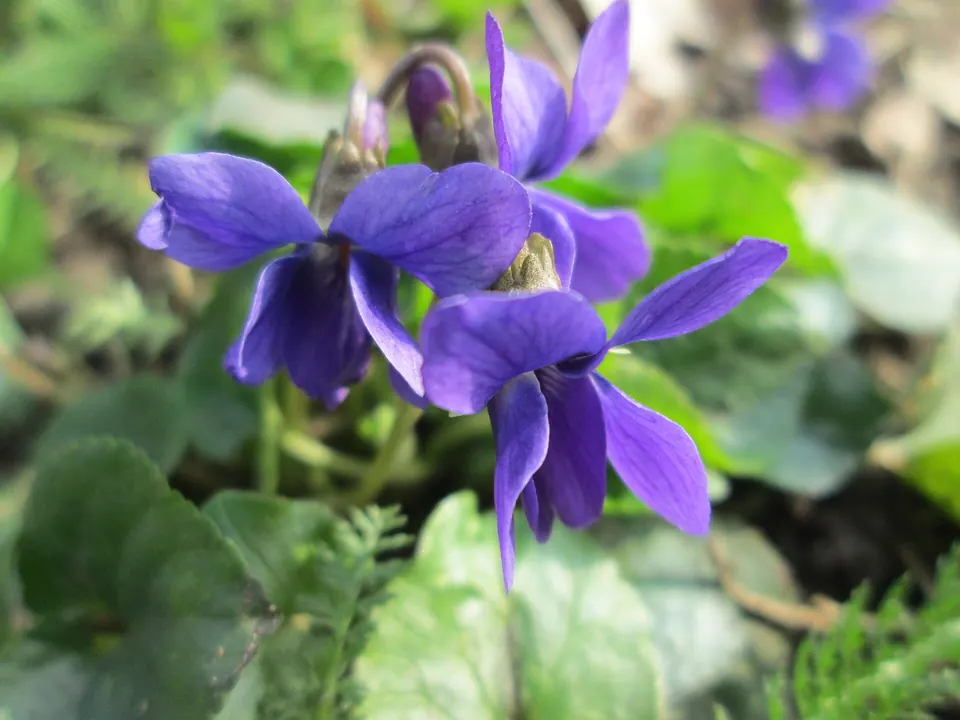

The violet means modesty and faithfulness. Kate Greenaway's 1884 Language of Flowers splits it by kind: the sweet violet is “modesty,” the blue violet “faithfulness” and the yellow violet “rural happiness.” The modesty comes from the way it grows, low and half hidden under its heart-shaped leaves, and the phrase “shrinking violet,” for a shy person, borrows the same idea.
The Almanac's modern list reads violets by color: purple for truth and loyalty, blue for faithfulness, white for innocence and purity, yellow for high worth.
Violets have some famous admirers. Napoleon's supporters took the violet as their emblem, and the story goes that they called him Corporal Violet because he promised to return from exile with the spring violets, which he did in March 1815. In Hamlet, Ophelia says she'd give violets, “but they withered all when my father died.” Closer to home, the violet is the state flower of Illinois, New Jersey, Rhode Island and Wisconsin.
What does the primrose mean?
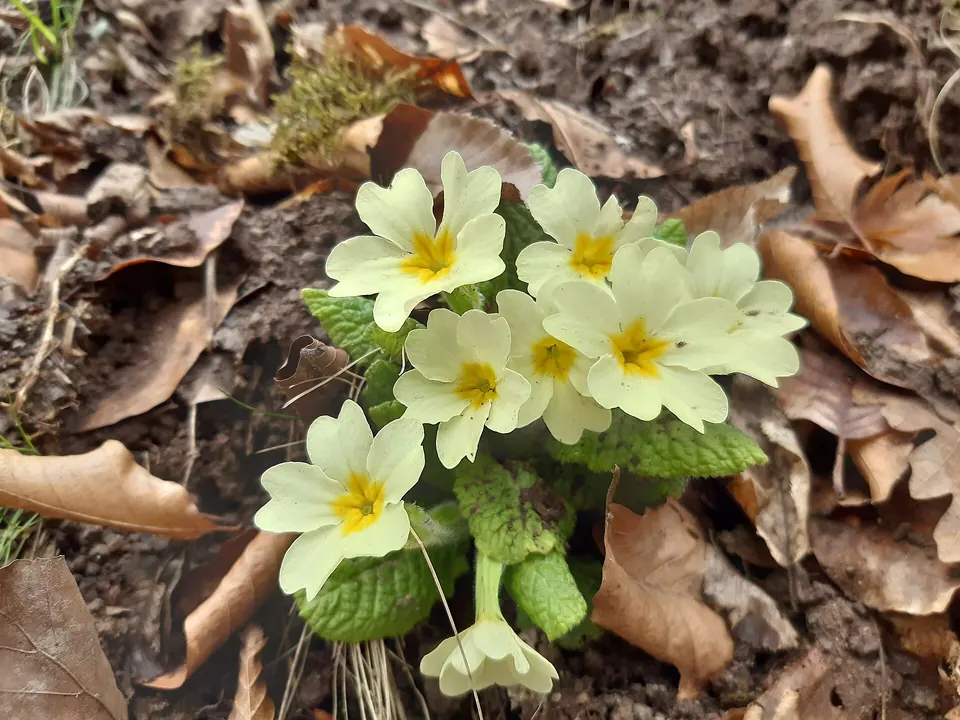

The primrose means early youth, in Greenaway's two words. The name says it too: Primula comes from the Latin primus, “first,” and “primrose” from the medieval prima rosa, the first rose. To the Victorians, the Almanac adds, a gift of primroses meant young love.
Shakespeare used it for something less innocent. “The primrose path” in Hamlet is the easy, pleasant road that ends somewhere bad, and the phrase is still with us.
In Britain the primrose once had its own day. Benjamin Disraeli, Queen Victoria's prime minister, was said to love it, and the Queen sent him primroses from Windsor. After his death on April 19, 1881, that date became Primrose Day, when admirers left primroses at his statue, and the Primrose League carried the name for more than a century.
Why does February have two birth flowers?
The Almanac's reason for the pairs, that different traditions chose different flowers and not every flower grows everywhere, fits February well. The two flowers mean nearly the same thing, youth and modesty, but they're at home in different places.
Violets are everywhere in North America: the common blue violet is native from Newfoundland to Texas and turns up in lawns, woods and sidewalk cracks. The wild primrose is European, and most Americans meet it in a pot. Between them, almost anyone can find a February flower.
February birth flower tattoo ideas
Both flowers are small and simple, which makes them good for small tattoos.
- A violet with its leaves. The heart-shaped leaves are half the charm. One flower with two leaves fits a wrist, ankle or collarbone.
- A small posy. Violets and primroses tied together with a thin ribbon line, the kind of bunch the Victorians gave as a message.
- Purple and pale yellow. The violet's purple next to the primrose's soft yellow is an easy two-color palette, and it holds up as watercolor.
- A family bouquet. Add the flowers of a partner's or child's birth month to a violet for a bouquet that grows with the family.
When and where do they bloom?
Both bloom at the turn of winter and spring. The sweet violet of the old books is European, but it has spread across North America, and the continent has its own violets too, like the common blue violet below. The primrose grows wild across Europe, from Ireland to Ukraine.
Violet (sweet violet)
Viola odorata · Violaceae
- Native to
- Europe, North Africa and western Asia, east to Kazakhstan. Naturalized across much of North America.
- In flower
- January to May where it grows in North America; March and April in Switzerland.
Common blue violet
Viola sororia · Violaceae
- Native to
- Eastern and central North America, from Newfoundland and Saskatchewan south to Florida, Texas and northeastern Mexico.
- In flower
- March to June.
Primrose
Primula vulgaris · Primulaceae
- Native to
- Europe, from Ireland, Britain and Norway south to Spain, Sicily and Crete and east to Ukraine, plus Algeria, Morocco, Turkey, Cyprus and the Caucasus.
- In flower
- Early spring. The name Primula comes from the Latin primus, “first,” for how early it opens.
Native ranges come from the World Checklist of Vascular Plants as published by World Flora Online (CC BY 4.0), names and families from Wikidata (CC0), and flowering times from the floras listed under Sources. They describe the wild plant; garden and florist flowers follow their own calendars.
Catch it in PocketPetal
In PocketPetal, every plant you snap is a catch: image recognition puts a name to it, the game rolls a rarity from Common to Mythic, and it goes into your collection. Violets are a good first hunt because they're so close to home.
Look along lawn edges, under hedges and at the foot of walls as the weather warms. They're small, so get low, fill the frame and hold still; if a photo comes out blurry, the app says so before it's sent. Primroses are easier still at a garden center, where potted plants count like any other.
February is still winter in the game, so a catch counts toward Winter Wonder. Catch the same violet patch again in March and it can earn Spring Awakening too, with a fresh rarity roll each time. See how rarity works, the seasonal badges and more walk ideas.
Sources and photo credits
- Birth flowers: The Old Farmer's Almanac, “Birth Month Flowers and Their Meanings”, the US list most American sources follow.
- Victorian meanings: Kate Greenaway, Language of Flowers (London, 1884), public domain, via Project Gutenberg.
- Modern meanings: The Old Farmer's Almanac, February birth flowers and “Flower Meanings: The Language of Flowers”.
- Names and families: Wikidata (CC0): Viola odorata, Viola sororia, Primula vulgaris.
- Native ranges: World Checklist of Vascular Plants, published by World Flora Online (CC BY 4.0): Viola odorata, Viola sororia, Primula vulgaris.
- Flowering times: Flora of North America (Viola odorata, Viola sororia); Flora Helvetica, via World Flora Online (Viola odorata); The Old Farmer's Almanac (primrose).
- Photo, violet: AnRo0002, CC0, via Wikimedia Commons.
- Photo, primrose: Sdjurovic, CC0, via Wikimedia Commons.