
What is the January birth flower?
The January birth flower is the carnation, with the snowdrop as the month's second flower. That's the order in The Old Farmer's Almanac, whose list is the one most American sources follow, so the primary January birth flower is the carnation.
They make an odd couple: a ruffled florist's flower that's in every shop all winter, and a small white one that opens in late winter, sometimes straight through the snow. One is bought, the other found.
What does the carnation mean?
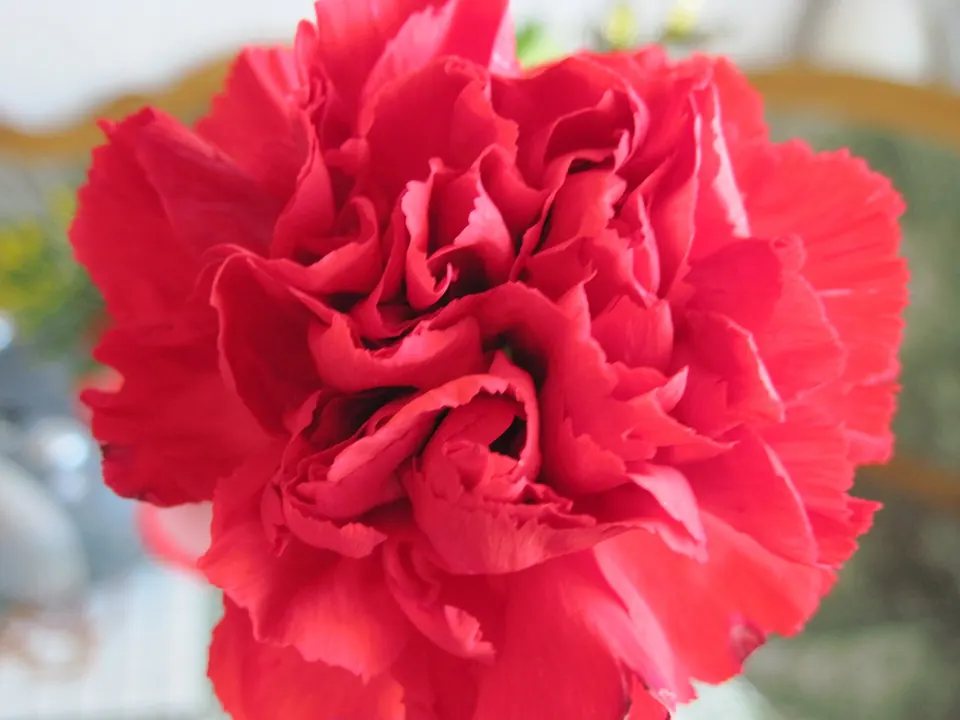

The carnation means fascination and love, and in the US it's above all the flower of a mother's love. That meaning has a clear starting point. In May 1908, Anna Jarvis sent 500 white carnations to the first official Mother's Day service, in Grafton, West Virginia. White, she said, stood for the truth, purity and charity of a mother's love. Six years later Woodrow Wilson made Mother's Day a national holiday, and the carnation came with it.
The Victorian language of flowers read carnations color by color. Kate Greenaway's 1884 Language of Flowers gives the carnation pink “woman's love,” deep red “Alas! for my poor heart,” striped “refusal” and yellow “disdain.”
It's a political flower too. Portugal's 1974 revolution is called the Carnation Revolution, after the red carnations that became its symbol. The scarlet carnation is Ohio's state flower, chosen in memory of President William McKinley, and Spain and Slovenia count it as a national flower.
What does the snowdrop mean?
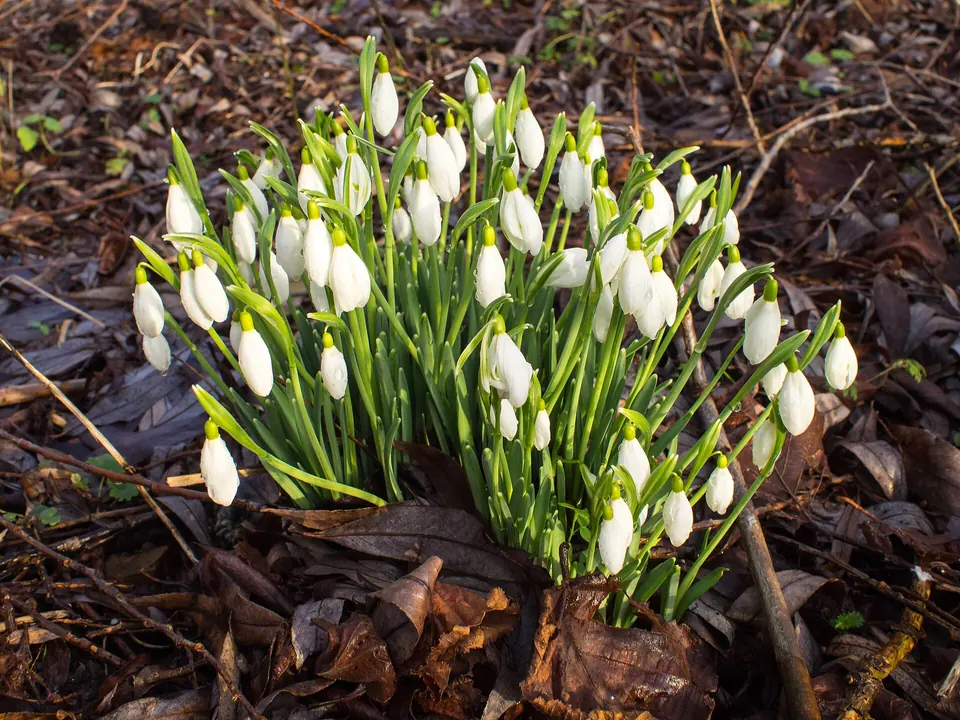

The snowdrop means hope. Greenaway gives it that one word, and it fits: it's among the first flowers to open each year, often with frost still on the ground, so seeing one means winter is starting to lose.
Older stories say the same. In a Christian legend the Almanac retells, an angel turned falling snowflakes into snowdrops to give Adam and Eve hope after they left Eden. In England the flower belonged to Candlemas, February 2, and was called Candlemas bells. Its scientific name, Galanthus, is Greek for “milk flower,” and its keenest British fans, who visit gardens in February just to see it, call themselves galanthophiles.
What do carnation colors mean?
Each carnation color has its own meaning, and the old and new lists mostly agree. Here is Greenaway's 1884 reading next to the Almanac's modern one.
| Color | Victorian meaning, 1884 | Modern meaning |
|---|---|---|
| Red | “Alas! for my poor heart” (deep red) | Deep love, “my heart aches” |
| Pink | “Woman's love” | “I'll never forget you,” a mother's love |
| White | Not listed | Innocence, pure love |
| Yellow | “Disdain” | Disappointment, rejection |
| Striped | “Refusal” | Refusal |
A red carnation says deep love and admiration. White carries the Mother's Day story. Pink is the one most often chosen for mothers today, and yellow, with “disdain” behind it, is best left out of a love note.
Why does January have two birth flowers?
No single authority ever fixed the birth flowers, and the lists don't all agree. The Almanac's explanation is that different cultures chose different flowers, and some flowers aren't around in every region, so it gives a traditional primary flower and a secondary one.
January shows why that helps. Carnations come from greenhouses, so they're in shops on any January birthday. Snowdrops depend on the weather and where you live: open in January in a mild year, waiting for February in a cold one. One flower you can count on, one you have to go looking for.
January birth flower tattoo ideas
The two work well together on skin because their shapes are so different: the carnation is all ruffles, the snowdrop three clean petals hanging from a curved stem.
- One stem, both flowers. A carnation at the top with a snowdrop curving off the same line suits a forearm or the side of the ribs.
- A fine-line snowdrop. One drooping bell is small enough for a wrist, an ankle or behind the ear, and reads well in plain black.
- A birth-month bouquet. Tie a carnation in with the flowers of a partner's or child's month for a small bouquet that holds the family.
- Color or black and grey. Red and pink carnations are made for color. Snowdrops are white, so in black and grey they're mostly shading and open skin, which suits them.
When and where do they bloom?
Neither is a North American wildflower. The carnation's wild range is a small corner of southeastern Europe, and the ones in shops are grown for florists. The snowdrop is European too, and has spread from old gardens into parts of the US and Canada.
Carnation
Dianthus caryophyllus · Caryophyllaceae
- Native to
- Southeastern Europe: Albania, Greece and the former Yugoslavia.
- In flower
- Early summer outdoors: June, in Flora Helvetica's records for Switzerland.
Snowdrop
Galanthus nivalis · Amaryllidaceae
- Native to
- Europe, from Spain and France east to Ukraine and south to Sicily and Greece. Naturalized in Britain, Scandinavia, eastern Canada and parts of the northeastern US.
- In flower
- Late winter to early spring.
Native ranges come from the World Checklist of Vascular Plants as published by World Flora Online (CC BY 4.0), names and families from Wikidata (CC0), and flowering times from the floras listed under Sources. They describe the wild plant; garden and florist flowers follow their own calendars.
Catch it in PocketPetal
PocketPetal is a plant-collecting game for iPhone and iPad. Snap a plant and it's caught: image recognition puts a name to it, the game rolls a rarity from Common to Mythic, and it joins your collection. A carnation or a snowdrop is a catch like any other plant.
In January the carnations are easy, because a florist's bucket or a shop window counts. Snowdrops take a walk: look under bare trees and along the edges of old gardens and parks late in the month, and get low with the camera instead of reaching in. Our winter walk ideas have more to look for on the way.
Any January catch counts toward Winter Wonder, the badge for catching a plant in winter (south of the equator, the game flips the seasons), and a catch the game files as a flower can complete the Flowering Find daily quest. Rarity is pure luck, with the same odds for every plant, so a grocery-store carnation has the same shot at Mythic as anything else. More on how rarity works and all 116 badges.
Sources and photo credits
- Birth flowers: The Old Farmer's Almanac, “Birth Month Flowers and Their Meanings”, the US list most American sources follow.
- Victorian meanings: Kate Greenaway, Language of Flowers (London, 1884), public domain, via Project Gutenberg.
- Modern meanings: The Old Farmer's Almanac, January birth flowers and “Flower Meanings: The Language of Flowers”.
- Names and families: Wikidata (CC0): Dianthus caryophyllus, Galanthus nivalis.
- Native ranges: World Checklist of Vascular Plants, published by World Flora Online (CC BY 4.0): Dianthus caryophyllus, Galanthus nivalis.
- Flowering times: Flora of North America (Galanthus nivalis); Flora Helvetica, via World Flora Online (Dianthus caryophyllus).
- Photo, carnation: InGenTech, Public domain, via Wikimedia Commons.
- Photo, snowdrop: Johan Neven from Borgloon-Gotem, Belgium, CC BY 2.0, via Wikimedia Commons.