
What is the September birth flower?
The September birth flower is the aster, with the morning glory as the second flower for the month, in the order The Old Farmer's Almanac gives.
What color is the September flower? Mostly purple. The aster's best-known shades are purple and blue, with pink and white too, and the morning glory adds blue, purple, pink, red and white.
What does the aster mean?
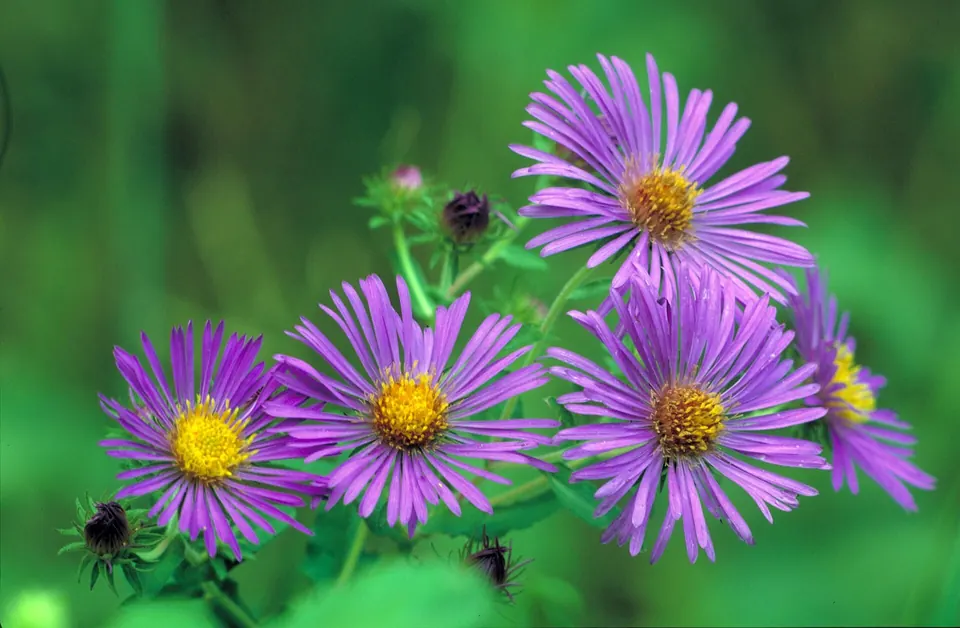

The aster means love and patience. The Almanac lists love, wisdom, patience and beauty, and notes that it's the flower given on a 20th wedding anniversary. The name is Greek for “star,” after the rays of petals around each flower head.
The Victorians saw it differently. Kate Greenaway's 1884 Language of Flowers gives the China aster “variety” and “afterthought,” and the Michaelmas daisy, an aster that opens around Michaelmas, September 29, also means “afterthought.” It's a fair name for a flower that blooms when most of the garden is done.
Aster colors have their own meanings in the Almanac's list: purple for wisdom, white for innocence, pink for love and kindness, red for devotion.
The aster in our photo is the New England aster, a North American wildflower. Botanists have moved it and most other American asters into a new genus, Symphyotrichum, but everyone still calls them asters.
What does the morning glory mean?
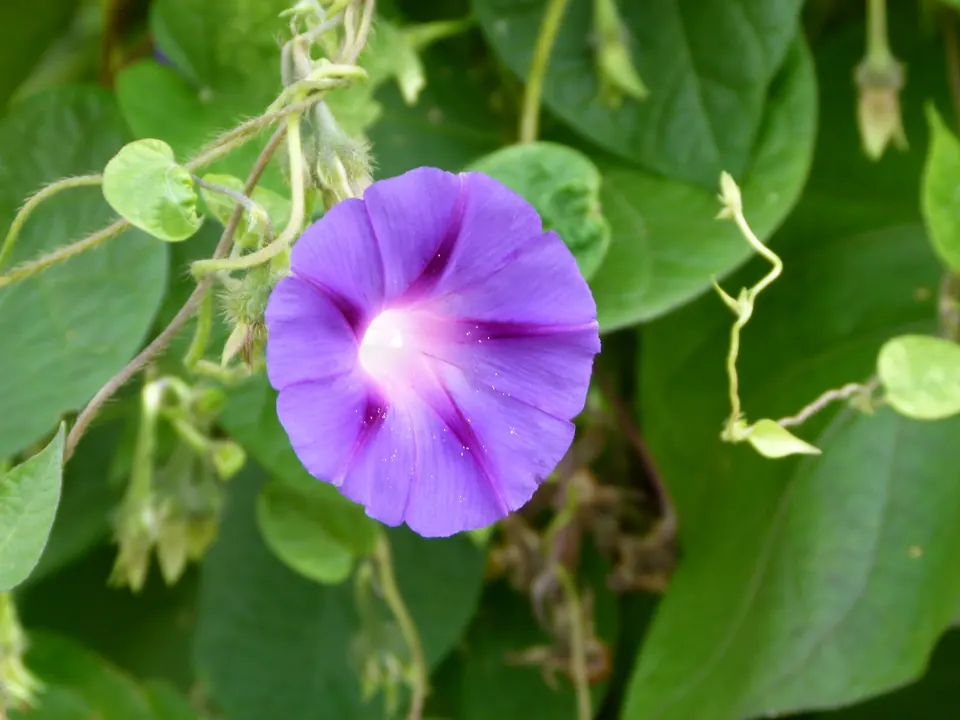

The morning glory means affection, or affectation, and that one letter is a real disagreement between the sources. Greenaway's 1884 list says “affectation,” a put-on show. The Almanac's modern list says “affection.” The Almanac adds that it has stood both for love never returned and for love that never ends.
The name is plain description. Each flower opens in the morning and closes by afternoon, so the show is over by lunch.
In Japan, where it's called asagao, “morning face,” the morning glory has been grown since the 700s. In the Edo period, from the 1600s to the 1800s, breeding it became a craze, with growers competing for the strangest leaves and petals.
Why does September have two birth flowers?
Different traditions, different regions: that's the Almanac's reason for giving most months two flowers. September's pair split the day between them. The morning glory is finished by early afternoon, and the aster is still open at dusk. One climbs fences, the other stands in meadows and along roadsides, and both are purple more often than not.
September birth flower tattoo ideas
Purple ties September's flowers together, so they're easy to pair.
- A starburst aster. A single aster drawn as a ring of fine petals is simple and looks like a small star, which is what the name means.
- A morning glory vine. Heart-shaped leaves and a few trumpet flowers on a twining stem can wrap an ankle, wrist or upper arm.
- Sunrise. A morning glory with a small rising sun behind it plays on the name and suits an early riser.
- Shades of purple. Lilac asters and a deep purple morning glory make a soft watercolor piece; in black and grey, the vine's curls carry it.
When and where do they bloom?
Both are American. The New England aster is native across southern Canada and most of the US east of the Rockies, and flowers from August into fall. The morning glory comes from the warmer Americas and has spread across most of the US.
Aster (new england aster)
Symphyotrichum novae-angliae · Asteraceae
- Native to
- North America: southern Canada and most of the US east of the Rockies, plus a few western states.
- In flower
- August to October, sometimes into November.
Morning glory (common morning glory)
Ipomoea purpurea · Convolvulaceae
- Native to
- The warmer Americas, from Arizona and Mexico through Central America and the Caribbean to Argentina. Naturalized across most of the US.
- In flower
- July to November.
Native ranges come from the World Checklist of Vascular Plants as published by World Flora Online (CC BY 4.0), names and families from Wikidata (CC0), and flowering times from the floras listed under Sources. They describe the wild plant; garden and florist flowers follow their own calendars.
Catch it in PocketPetal
PocketPetal is a plant-collecting game. Snap a plant and it's caught, named by image recognition and given a rarity roll from Common to Mythic.
Morning glories make a good early catch, because they close by afternoon. Early Bird, one of the daily quests, asks for a catch before 9am, and a catch before 7am earns the Early Bird badge. Asters are a later-in-the-day find, in meadows, park edges and along roadsides, often with bees working them; snap from where you stand.
In the Northern Hemisphere, fall in the game starts in September, so catches count toward Autumn Harvest. See rarity, the time and season badges and our walk ideas.
Sources and photo credits
- Birth flowers: The Old Farmer's Almanac, “Birth Month Flowers and Their Meanings”, the US list most American sources follow.
- Victorian meanings: Kate Greenaway, Language of Flowers (London, 1884), public domain, via Project Gutenberg.
- Modern meanings: The Old Farmer's Almanac, September birth flowers and “Flower Meanings: The Language of Flowers”.
- Names and families: Wikidata (CC0): Symphyotrichum novae-angliae, Ipomoea purpurea.
- Native ranges: World Checklist of Vascular Plants, published by World Flora Online (CC BY 4.0): Symphyotrichum novae-angliae, Ipomoea purpurea.
- Flowering times: Flora of North America (Symphyotrichum novae-angliae, Ipomoea purpurea).
- Photo, aster: Dr. Thomas G. Barnes, U.S. Fish and Wildlife Service, Public domain, via Wikimedia Commons.
- Photo, morning glory: Dinkum, CC0, via Wikimedia Commons.